Benefits of Investing in Custom Software Development Services
Investing in custom software development services helps businesses improve operational efficiency, automate workflows, strengthen security, and achieve long-term growth. Unlike off-the-shelf applications, custom software is designed around specific business requirements, making it easier to manage processes, integrate existing systems, and adapt to changing market demands.
As businesses embrace digital transformation, choosing the right software solution has become essential for maintaining a competitive advantage.
What Are Custom Software Development Services?
Custom software development services involve designing, building, testing, and maintaining software tailored to an organization's unique requirements. These solutions address specific business challenges rather than offering generic features that may not match existing workflows.
Businesses can invest in custom applications for customer relationship management (CRM), enterprise resource planning (ERP), workflow automation, data management, and business intelligence.
Explore Custom Software Development Services to understand how tailored software solutions can support your business objectives.
7 Key Benefits of Investing in Custom Software Development Services
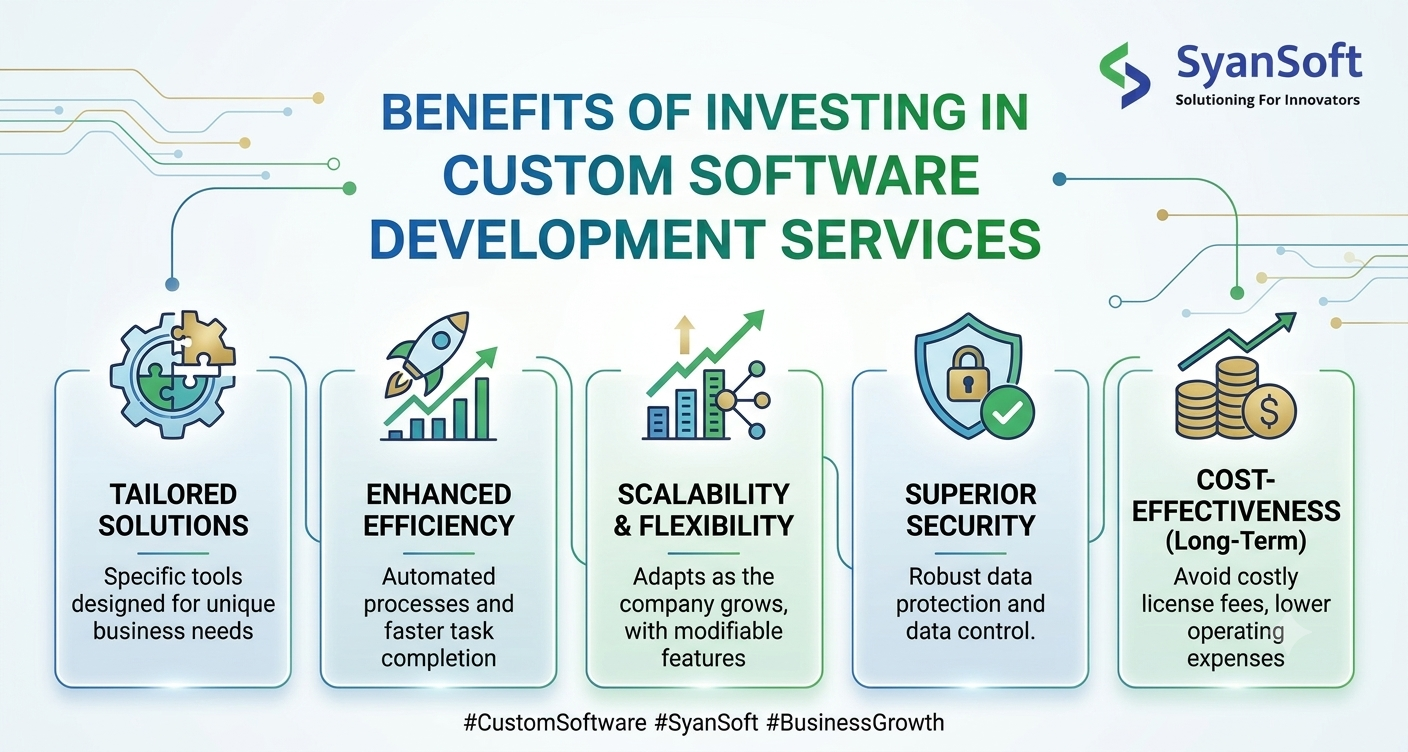
1. Tailored Solutions for Business Requirements
Every business has different processes, operational challenges, and growth objectives. Custom software is developed according to these specific needs.
It allows organizations to build features that support their workflows without depending on unnecessary functionalities. This improves usability, simplifies daily operations, and helps teams work more efficiently.
2. Improved Operational Efficiency
Manual processes and disconnected applications can slow down business operations. Custom software helps automate repetitive tasks, streamline workflows, and reduce human errors.
For example, businesses can automate reporting, employee management, inventory tracking, and customer communication. This allows employees to focus more on strategic activities instead of routine administrative work.
3. Better Scalability and Flexibility
Business requirements change as organizations grow. Custom software can be upgraded with additional features, users, integrations, and functionalities whenever needed.
Unlike many ready-made applications, custom solutions offer greater flexibility to accommodate evolving business requirements without completely changing the existing system.
4. Enhanced Data Security and Control
Data security is an important consideration for modern businesses. Custom software allows organizations to implement security measures based on their operational and compliance requirements.
These may include role-based access control, data encryption, secure authentication, and regular security updates.
Having greater control over software architecture and data management also helps businesses build a more reliable technology environment.
5. Seamless Integration With Existing Systems
Businesses often use multiple applications for accounting, customer management, communication, and operations. When these systems work independently, managing information becomes complicated.
Custom software can integrate with existing business applications, APIs, CRM platforms, ERP systems, and cloud services.
This creates a connected technology ecosystem where information can move more efficiently between departments.
6. Long-Term Cost Efficiency
Ready-made software may appear affordable initially, but recurring subscription fees, licensing costs, additional integrations, and feature limitations can increase long-term expenses.
Custom software requires an initial development investment, but businesses gain greater control over features, upgrades, and maintenance.
Over time, the right solution can reduce operational costs and deliver better value by addressing business-specific requirements.
7. Competitive Business Advantage
Businesses need technology that helps them respond quickly to customer expectations and industry changes.
Custom software enables organizations to introduce unique features, improve customer experiences, optimize internal operations, and develop innovative services.
This flexibility helps businesses differentiate themselves and build a stronger position in competitive markets.
When Should a Business Invest in Custom Software Development?
Custom software development can be a suitable investment when:
Identifying these challenges helps businesses determine whether a custom solution can deliver measurable value.
How to Choose the Right Custom Software Development Company?
Selecting an experienced development partner is essential for successful software implementation. Before making a decision, consider the following factors:
The right development partner can help transform business requirements into reliable and scalable software solutions.
Conclusion
Investing in custom software development services is a strategic step toward improving business efficiency, strengthening security, and supporting long-term growth. From workflow automation and seamless integration to scalability and competitive advantages, tailored software helps organizations address their unique operational challenges.


Comments
Post a Comment