The Role of Tax Technology in Digital Tax Transformation
Digital tax transformation is helping businesses improve tax accuracy, reduce manual work, and manage changing regulations more efficiently. By adopting modern tax technology, organizations can automate tax calculations, integrate financial data, simplify compliance, and gain real-time insights for better business decisions.
What Is Tax Technology in Digital Tax Transformation?
Tax technology refers to digital tools and software that help businesses manage tax calculations, reporting, compliance, data analysis, and regulatory requirements. It combines automation, artificial intelligence (AI), cloud computing, and data analytics to make tax operations faster, more accurate, and more transparent.
Digital tax transformation uses these technologies to replace traditional, manual tax processes with connected and data-driven workflows. Businesses can streamline tax operations, reduce errors, and adapt more effectively to changing tax regulations.
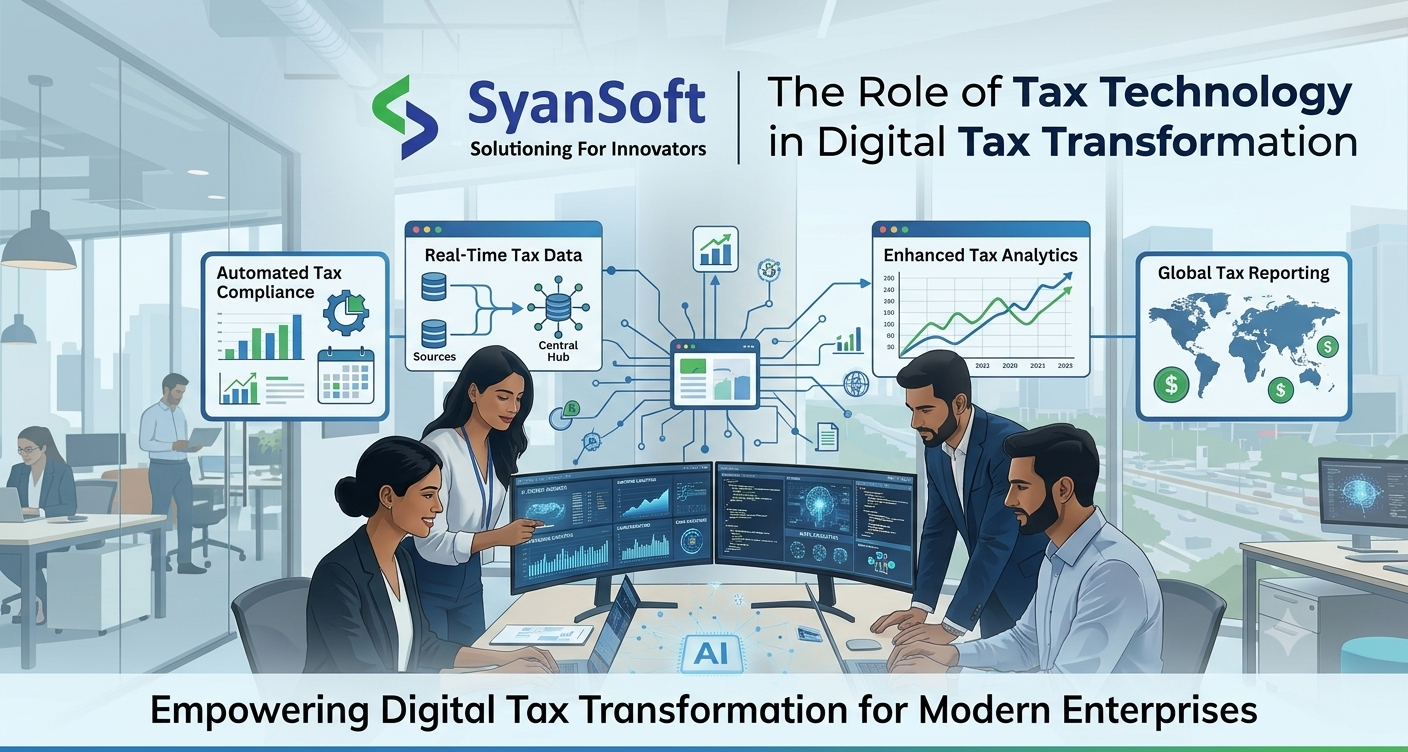
Why Is Tax Technology Important for Modern Businesses?
Traditional tax management often involves spreadsheets, disconnected systems, repetitive data entry, and time-consuming reporting. These challenges can increase compliance risks and limit visibility into financial information.
Modern Tax Technology helps organizations address these issues through automated workflows, centralized data management, and improved reporting capabilities.
Key benefits include:
How Does Tax Technology Support Digital Tax Transformation?
Tax technology transforms tax operations by connecting business systems, automating processes, and improving access to reliable financial data.
1. Tax Process Automation
Automation helps manage repetitive activities such as tax calculations, invoice validation, reconciliations, and report preparation. This allows tax professionals to focus on strategic planning rather than routine administrative work.
2. AI-Powered Tax Data Analysis
Artificial intelligence can help identify unusual transactions, detect inconsistencies, classify financial data, and highlight potential compliance risks. These capabilities support faster analysis and more informed decision-making, while human review remains important for complex tax judgments.
3. Integration With ERP and Financial Systems
Integrating tax solutions with enterprise resource planning (ERP), accounting, and financial management platforms creates a consistent flow of information. This reduces duplicate data entry and helps maintain accurate records across departments.
4. Cloud-Based Tax Management
Cloud-based platforms allow authorized teams to access tax information, collaborate across locations, and manage reporting processes more efficiently. They can also support scalability and centralized system updates.
5. Data Analytics and Reporting
Advanced analytics help businesses monitor tax positions, review historical trends, and identify potential issues. Clear reporting improves visibility and supports better financial planning.
Key Challenges in Adopting Tax Technology
Although digital tax transformation offers significant benefits, businesses may face several challenges during implementation.
Organizations can address these challenges by assessing their existing tax processes, establishing data governance standards, training employees, and implementing technology in manageable phases.
Best Practices for Successful Digital Tax Transformation
Businesses should follow a structured approach to maximize the value of tax technology.
Conclusion
Tax technology plays a central role in digital tax transformation by improving accuracy, automating repetitive work, and connecting tax operations with broader business systems. With AI, cloud platforms, data analytics, and ERP integration, organizations can build more efficient and transparent tax processes.
Businesses that adopt the right digital strategy can strengthen compliance, reduce operational complexity, and prepare for evolving regulatory requirements. Investing in modern tax technology is an important step toward creating a more agile, data-driven tax function.
Explore SyanSoft's Tax Technology services to discover how digital solutions can support tax automation, integration, and business transformation.
Frequently Asked Questions (FAQs)
1. What is digital tax transformation?
Digital tax transformation is the use of modern technologies to automate and improve tax calculations, reporting, compliance, and financial data management.
2. How does tax technology improve tax compliance?
It supports compliance through automated calculations, data validation, centralized records, and more efficient reporting workflows.
3. What technologies are used in digital tax transformation?
Common technologies include artificial intelligence, cloud computing, robotic process automation, data analytics, and ERP integration.
4. Can tax technology reduce manual errors?
Yes. Automated calculations, validation rules, and integrated data workflows can reduce many errors associated with manual data entry and spreadsheet-based processes.
5. How can businesses start implementing tax technology?
Businesses can begin by assessing existing tax processes, identifying automation opportunities, improving data quality, selecting suitable solutions, and introducing the technology in phases.


Comments
Post a Comment