Tax Compliance & Reporting: Simplifying Regulatory Compliance for Modern Businesses
In today's dynamic business environment, tax regulations are constantly evolving, making compliance more complex than ever before. Businesses of all sizes must navigate changing tax laws, reporting standards, and filing requirements while ensuring accuracy and meeting strict deadlines. Failure to comply can result in penalties, legal complications, reputational damage, and financial losses.
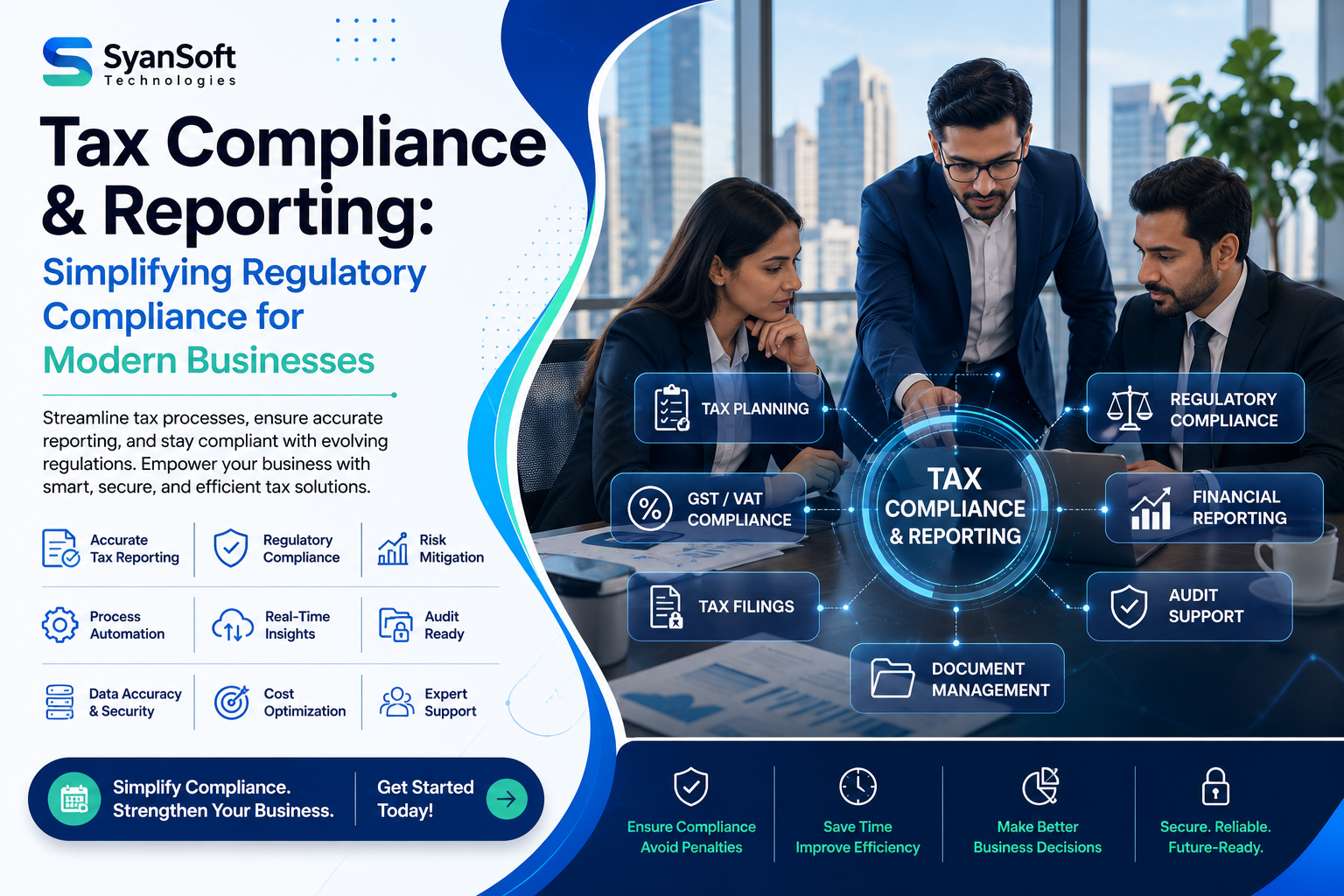
Effective Tax Compliance & Reporting goes beyond fulfilling statutory obligations—it is a strategic function that helps organizations maintain financial transparency, mitigate risks, and support sustainable growth. By leveraging advanced tax technologies, automation, and expert guidance, businesses can streamline tax processes, improve reporting accuracy, and stay compliant with local and international regulations.
In this blog, we'll explore the importance of tax compliance and reporting, the challenges businesses face, key benefits, best practices, and how SyanSoft Technologies helps organizations simplify tax management through innovative digital solutions.
What Is Tax Compliance & Reporting?
Tax Compliance & Reporting refers to the processes involved in calculating, filing, documenting, and reporting taxes in accordance with applicable laws and regulatory requirements. It ensures that businesses accurately report their financial information, meet tax obligations on time, and maintain proper records for audits and inspections.
Tax compliance typically includes:
- Tax calculation and filing
- GST/VAT compliance
- Corporate income tax reporting
- Tax reconciliation
- Withholding tax management
- Transfer pricing documentation
- Regulatory reporting
- Tax audit support
- Record maintenance and documentation
A well-managed tax compliance framework helps organizations reduce errors, improve financial governance, and strengthen stakeholder confidence.
Why Tax Compliance Matters for Modern Businesses
Tax regulations continue to evolve as governments introduce new policies, digital reporting requirements, and stricter enforcement measures. Businesses must adapt quickly to remain compliant while minimizing administrative burdens.
Key reasons why tax compliance is essential include:
- Avoiding penalties and legal issues
- Maintaining regulatory compliance
- Building investor and stakeholder trust
- Supporting financial transparency
- Improving business reputation
- Reducing audit risks
- Enhancing operational efficiency
Organizations that prioritize tax compliance are better equipped to manage financial risks and make informed business decisions.
Key Benefits of Tax Compliance & Reporting
1. Improved Regulatory Compliance
Accurate tax reporting ensures businesses comply with local, national, and international tax regulations. This minimizes the risk of fines, legal disputes, and non-compliance issues.
Benefits include:
- Timely tax filing
- Accurate financial reporting
- Reduced compliance risks
- Better governance
2. Increased Accuracy Through Automation
Modern tax solutions automate repetitive calculations, validations, and reporting processes, reducing manual effort and human error.
Automation helps organizations:
- Improve reporting accuracy
- Accelerate tax preparation
- Eliminate duplicate data entry
- Standardize tax workflows
3. Better Financial Visibility
Comprehensive tax reporting provides valuable insights into an organization's financial position, enabling leadership teams to make strategic decisions with confidence.
Businesses gain:
- Real-time financial insights
- Better tax forecasting
- Improved budgeting
- Enhanced cash flow management
4. Reduced Operational Costs
Digital tax compliance solutions streamline workflows, reduce paperwork, and minimize manual intervention, resulting in lower administrative costs and increased productivity.
5. Enhanced Audit Readiness
Maintaining accurate documentation and organized financial records simplifies audits and regulatory reviews.
Businesses benefit from:
- Centralized tax documentation
- Faster audit response
- Improved traceability
- Stronger internal controls
Common Tax Compliance Challenges
Many organizations struggle with increasingly complex tax environments.
Common challenges include:
- Frequent regulatory changes
- Manual tax processes
- Data inconsistencies
- Multiple tax jurisdictions
- Tight filing deadlines
- Integration issues with ERP systems
- Limited visibility into tax data
- Resource constraints
Partnering with experienced tax technology experts helps businesses overcome these challenges through automation and standardized processes.
How Technology Is Transforming Tax Compliance
Digital transformation has revolutionized tax management by introducing intelligent automation, cloud platforms, and advanced analytics.
Modern tax technologies include:
Artificial Intelligence (AI)
AI assists with tax data analysis, anomaly detection, document classification, and predictive insights.
Robotic Process Automation (RPA)
RPA automates repetitive tax tasks such as data extraction, reconciliation, and report generation.
Cloud-Based Tax Platforms
Cloud solutions enable secure access, real-time collaboration, automatic updates, and scalable tax management.
Advanced Analytics
Analytics dashboards provide actionable insights into tax performance, compliance status, and financial trends.
Best Practices for Effective Tax Compliance & Reporting
To strengthen tax governance and improve operational efficiency, businesses should adopt the following best practices:
Maintain Accurate Financial Records
Ensure all financial transactions are recorded accurately and supported by proper documentation.
Stay Updated on Regulatory Changes
Monitor tax law updates and adjust internal processes to remain compliant.
Automate Tax Processes
Leverage technology to improve accuracy, reduce manual work, and streamline reporting.
Integrate Tax with ERP Systems
Connecting tax solutions with enterprise systems improves data consistency and reporting efficiency.
Conduct Regular Compliance Reviews
Periodic internal audits help identify potential issues before regulatory inspections.
Train Finance Teams
Continuous learning ensures employees understand evolving tax regulations and compliance requirements.
Common Mistakes Businesses Should Avoid
Even well-established organizations can face compliance challenges due to avoidable mistakes.
Common pitfalls include:
- Missing tax filing deadlines
- Relying on manual spreadsheets
- Ignoring regulatory updates
- Incomplete financial documentation
- Poor record management
- Lack of internal compliance controls
- Delayed tax reconciliations
- Inadequate audit preparation
Avoiding these issues reduces financial risks and improves long-term compliance.
Future Trends in Tax Compliance & Reporting
As tax regulations become increasingly digital, organizations are investing in intelligent technologies to enhance compliance and reporting.
Emerging trends include:
- AI-driven tax analytics
- Continuous transaction monitoring
- Real-time tax reporting
- Cloud-native tax platforms
- Predictive compliance management
- Blockchain-enabled audit trails
- Automated regulatory updates
- Integrated enterprise tax ecosystems
Businesses that embrace these innovations will be better prepared for future regulatory changes and digital tax initiatives.
Why Choose SyanSoft Technologies?
At SyanSoft Technologies, we help businesses simplify complex tax compliance processes through innovative technology solutions and enterprise-grade automation. Our experts work closely with organizations to improve tax accuracy, streamline reporting, and strengthen regulatory compliance.
Our Tax Compliance & Reporting solutions include:
- Tax Process Automation
- Regulatory Compliance Consulting
- ERP Tax Integration
- GST and Indirect Tax Solutions
- Financial Reporting Automation
- Cloud-Based Tax Management
- Data Analytics and Dashboards
- Audit Readiness Support
- Tax Technology Consulting
- Ongoing Compliance Monitoring
Our scalable and secure solutions help businesses reduce compliance risks while improving operational efficiency and financial transparency.
Conclusion
Tax compliance and reporting are critical components of modern business governance. As regulatory requirements continue to evolve, organizations must adopt efficient processes and digital technologies to ensure accurate reporting, minimize risks, and maintain compliance.
By leveraging automation, cloud platforms, and intelligent tax solutions, businesses can transform tax management from a regulatory obligation into a strategic advantage.
Partnering with SyanSoft Technologies enables organizations to streamline tax compliance, improve reporting accuracy, and stay ahead of changing regulations. Whether you're modernizing your tax operations or strengthening your compliance framework, our expert solutions help you achieve greater efficiency, transparency, and long-term business success. Contact us for any further Information: 8130874884
.jpg)


Comments
Post a Comment