SEO & Content Marketing Strategies: Driving Sustainable Growth in the Digital Age
In the modern digital landscape, visibility is the ultimate currency. Businesses can no longer rely on standalone optimization tactics or isolated creative writing to capture their audience's attention. To build a resilient digital footprint that withstands shifting search algorithms and rising customer acquisition costs, organizations must merge two powerhouse disciplines into a single, cohesive engine: SEO and Content Marketing.
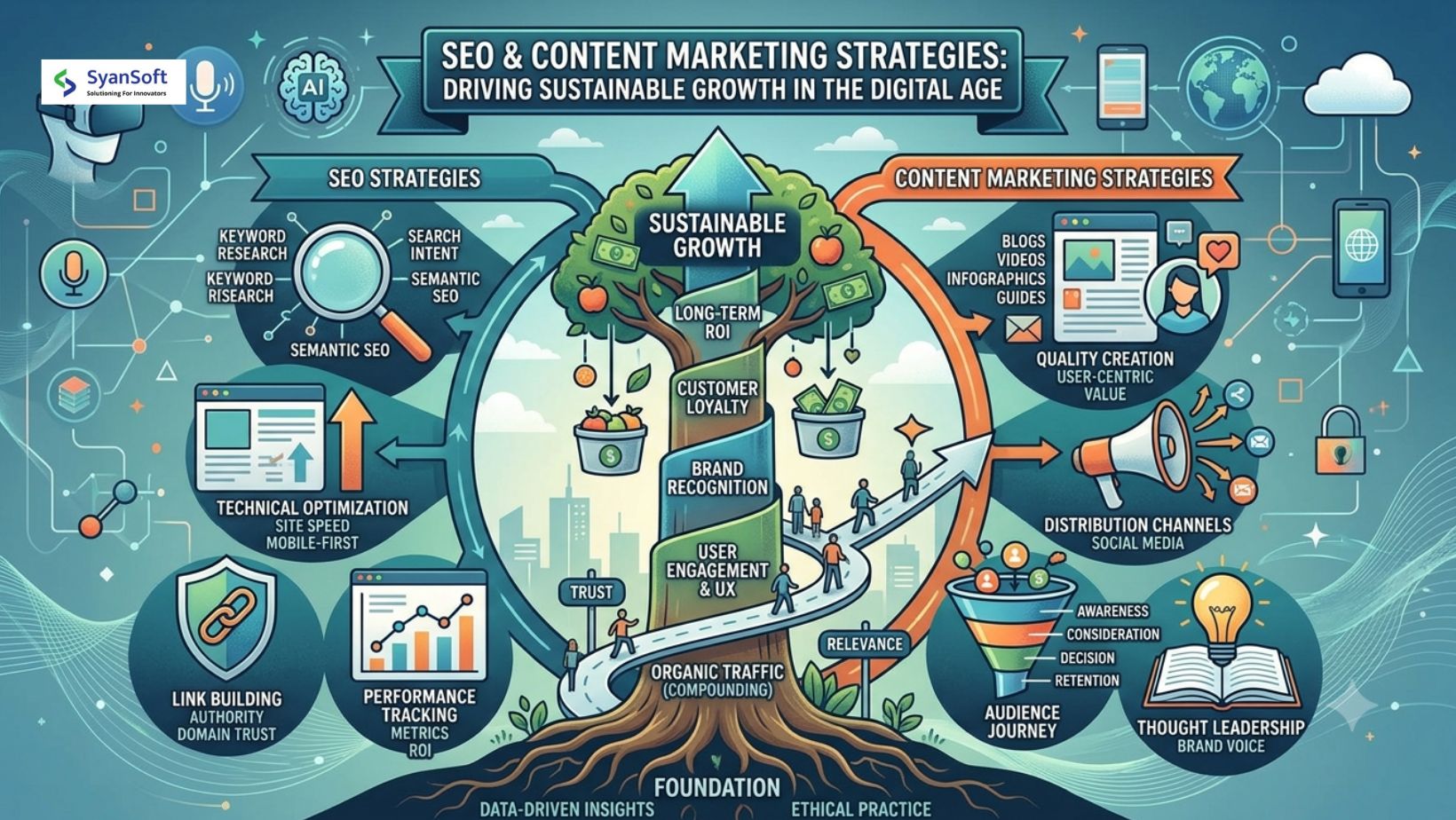
When executed together, SEO provides the technical blueprint and data-driven insights, while content marketing delivers the human connection, storytelling, and brand authority. Here is a comprehensive strategy for integrating these disciplines to drive sustainable, long-term business growth.
1. The Core Pillars of Modern SEO
Search Engine Optimization (SEO) ensures that your digital assets are discoverable, structured correctly, and recognized as authoritative by search engines. A successful strategy requires a balanced focus across several critical areas:
- Keyword Research & Search Intent: Moving beyond simple search volume, modern keyword strategy focuses on understanding why a user is searching. Mapping transactional, informational, and navigational keywords ensures you target audiences at every stage of the buying funnel.
- Technical SEO: The technical health of your website dictates how effectively search engines can crawl and index your pages. Key areas of focus include maximizing website page speed, building a clean architecture, ensuring full mobile-friendliness, and resolving crawl errors.
- On-Page Optimization: This involves aligning individual web pages with targeted user queries. Fine-tuning content structure, utilizing strategic header tags (
H1,H2,H3), and crafting optimized titles and meta descriptions are essential for improving organic visibility. - Link Building: Securing high-quality backlinks from authoritative, industry-relevant websites acts as a digital vote of confidence, signaling to search engines that your content is trustworthy and reliable.
- Local SEO: For businesses targeting specific regional markets, optimizing for local search—including managing business profiles and local directory citations—captures high-intent intent from nearby customers.
2. Crafting a High-Impact Content Marketing Strategy
While SEO pulls users to your platform, content marketing is what keeps them there, builds trust, and drives conversions. A high-impact content strategy focuses on depth, relevance, and distribution:
- Target Audience Personas: Effective content begins with a deep understanding of your audience. Creating detailed buyer personas allows you to address the specific pain points, challenges, and goals of your ideal customers.
- Content Creation Across Mediums: Diverse audiences consume information differently. A robust strategy balances deep-dive written articles and blogs with engaging visual elements, video content, and informative podcasts to maximize reach.
- Storytelling & Engagement: Audiences connect with stories, not sales pitches. Infusing your content with authentic brand storytelling establishes an emotional connection, turning casual readers into brand advocates.
- Strategic Content Distribution: Great content is ineffective if it sits in a vacuum. Omnichannel distribution across social media channels, targeted email newsletters, and relevant industry forums ensures your assets reach your audience where they are most active.
- Analytics & Performance Measurement: Content marketing is an iterative process. Tracking key performance metrics through comprehensive data charts allows teams to analyze engagement, refine distribution tactics, and continuously optimize creative output.
3. The Power of Integration: Connecting the Dots
The true magic happens when SEO and content marketing operate as a unified ecosystem rather than separate silos.
Developing Long-Term Content Pillars
Instead of publishing scattered, disconnected blog posts, use your SEO keyword data to build comprehensive Content Pillars. These are deep, authoritative guides on core industry topics supported by a cluster of smaller, interrelated articles. This internal linking structure signals deep topical authority to search engines while offering a seamless learning journey for the user.
Prioritizing User-First Content
Search engines increasingly reward content that demonstrates genuine expertise and provides real value to human readers. By combining technical SEO data with creative storytelling, you can design "user-first" content that answers complex questions clearly, keeps bounce rates low, and naturally attracts organic backlinks.
Embracing Constant Refinement
The digital landscape is never static. Algorithm updates, changing consumer habits, and competitive shifts require constant refinement. Regularly auditing your top service pages, refreshing outdated statistics, and repurposing top-performing blog posts into new formats ensures your digital ecosystem continues to generate compounding organic returns over time.
4. Conclusion: Navigating the Next Era of Digital Growth
As artificial intelligence and changing search behaviours redefine how information is found, an integrated approach to SEO and content marketing is no longer optional—it is a baseline requirement for sustainable growth. By pairing technical precision with authentic, high-quality content, businesses can build a digital asset that drives consistent traffic, fosters deep customer loyalty, and delivers a superior return on investment.

.jpg)

Comments
Post a Comment