Legacy System Modernization: Transforming Outdated Applications into Future-Ready Digital Solutions
In today’s rapidly evolving digital landscape, businesses must continuously adapt to changing technologies, customer expectations, and market demands. However, many organizations still rely on legacy systems that were built years ago and are difficult to maintain, scale, and integrate with modern technologies. Legacy System Modernization provides a strategic approach to upgrading outdated applications, improving performance, and creating a strong foundation for digital transformation.
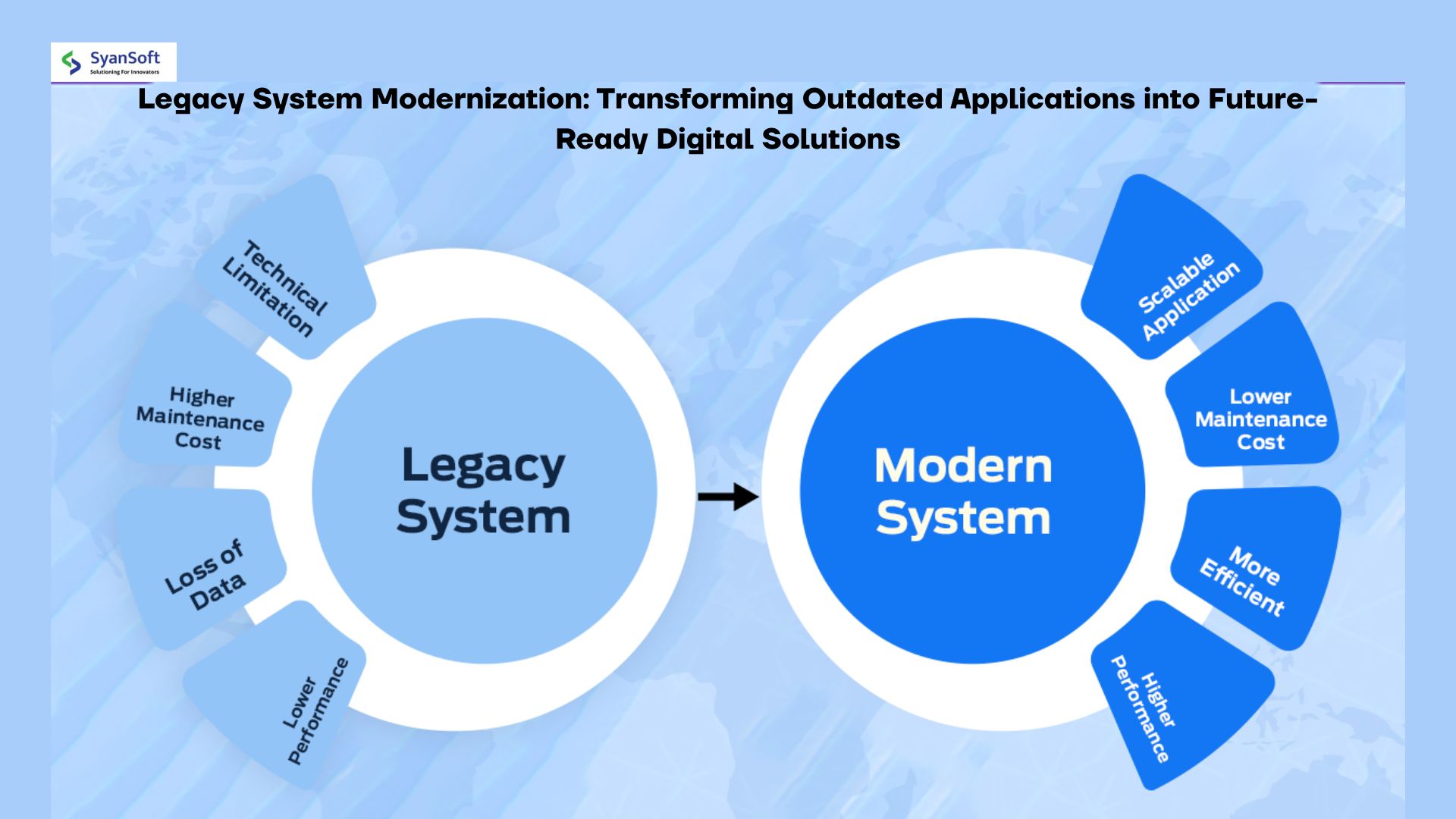
Modernizing legacy systems enables enterprises to enhance operational efficiency, reduce technical limitations, improve security, and leverage emerging technologies such as cloud computing, Artificial Intelligence (AI), automation, and advanced analytics.
What is Legacy System Modernization?
Legacy System Modernization is the process of transforming outdated software applications, infrastructure, and technology platforms into modern, flexible, and scalable solutions. Instead of completely replacing existing systems, modernization focuses on improving and upgrading current applications while preserving valuable business logic and data.
Organizations can modernize legacy systems through various approaches, including cloud migration, application reengineering, system integration, database modernization, and adopting modern development frameworks.
Why Businesses Need Legacy System Modernization
Legacy systems often create challenges such as limited scalability, high maintenance costs, security risks, and difficulty integrating with new technologies. Modernization helps businesses overcome these barriers and stay competitive.
1. Improved System Performance
Modernized applications deliver faster performance, better reliability, and improved user experiences. Businesses can optimize workflows and ensure smooth operations with upgraded technology platforms.
2. Enhanced Security and Compliance
Older systems may have outdated security measures and vulnerabilities. Legacy modernization strengthens cybersecurity by implementing modern security practices, encryption, and compliance standards.
3. Reduced Operational Costs
Maintaining outdated systems can be expensive due to frequent repairs and limited support. Modernization reduces maintenance costs by introducing efficient architectures and automated processes.
4. Better Scalability and Flexibility
Modern applications are designed to scale according to business growth. Cloud-based and modular solutions allow enterprises to quickly adapt to changing requirements.
5. Integration with Emerging Technologies
Legacy modernization enables businesses to integrate advanced technologies such as AI, Machine Learning, IoT, cloud platforms, and automation tools to drive innovation.
Key Approaches to Legacy System Modernization
Application Reengineering
Application reengineering involves restructuring and improving existing software to enhance performance, maintainability, and functionality while preserving important business processes.
Cloud Migration
Moving legacy applications to cloud platforms improves scalability, accessibility, security, and cost efficiency. Cloud modernization helps organizations achieve greater flexibility and operational agility.
System Integration
Modernization connects legacy applications with modern systems, APIs, and enterprise platforms to create a unified digital ecosystem.
Database Modernization
Upgrading outdated databases improves data management, accessibility, performance, and analytics capabilities.
Application Replacement
In some cases, replacing outdated applications with modern solutions is the best approach to achieve long-term business goals.
Benefits of Legacy System Modernization
Faster Business Innovation
Modern technology platforms allow organizations to introduce new features, services, and solutions faster.
Improved Customer Experience
Modernized systems provide better performance, personalized experiences, and seamless digital interactions for customers.
Increased Operational Efficiency
Automation and optimized workflows reduce manual efforts and improve overall productivity.
Data-Driven Decision Making
Modern systems provide advanced analytics and real-time insights that help businesses make smarter decisions.
Competitive Advantage
Organizations with modern technology infrastructure can respond faster to market changes and maintain a competitive edge.
Role of AI and Automation in Legacy Modernization
Artificial Intelligence and automation are transforming the modernization process by helping businesses analyze existing systems, automate workflows, and improve decision-making.
AI-powered modernization solutions can assist with:
- Automated code analysis and transformation
- Intelligent data migration
- Predictive system monitoring
- Workflow automation
- Enhanced business intelligence
By combining modernization with AI capabilities, enterprises can build smarter and more efficient digital environments.
Challenges in Legacy System Modernization
While modernization offers significant benefits, organizations may face challenges such as:
- Complex legacy architecture
- Data migration risks
- Business process disruptions
- Budget constraints
- Lack of technical expertise
Partnering with an experienced technology provider helps businesses overcome these challenges and ensure a successful modernization journey.
Why Choose SyanSoft Technologies for Legacy System Modernization?
SyanSoft Technologies helps enterprises transform outdated applications into modern, scalable, and secure digital solutions. With expertise in cloud technologies, enterprise software development, AI integration, and application modernization, SyanSoft delivers customized strategies aligned with business objectives.
The company focuses on minimizing risks, improving system performance, and enabling organizations to achieve seamless digital transformation through innovative modernization solutions.
Future of Legacy System Modernization
The future of legacy modernization will be driven by cloud adoption, AI-powered automation, microservices architecture, and intelligent digital platforms. Businesses that modernize their technology infrastructure can achieve greater agility, efficiency, and innovation.
As digital transformation continues to accelerate, legacy system modernization will remain a critical strategy for organizations seeking sustainable growth and long-term success.
Conclusion
Legacy System Modernization is essential for businesses that want to overcome technology limitations and embrace digital innovation. By upgrading outdated systems, organizations can improve efficiency, enhance security, reduce costs, and prepare for future opportunities.
With the right modernization strategy and technology partner, enterprises can transform legacy applications into powerful, future-ready solutions that support continuous growth and digital excellence. Get in touch with our team.

.jpg)

Comments
Post a Comment