Legacy System Modernization: Transforming Outdated Systems for Future-Ready Business Growth
In today's rapidly changing digital environment, companies must constantly adapt to changing technologies and consumer demands. Yet, a lot of companies depend on outdated technology that was developed several years ago, or even decades ago. Although these systems might be useful, they have not served their intended purpose; however, they can be a barrier to innovation, scaling and operational efficiency.
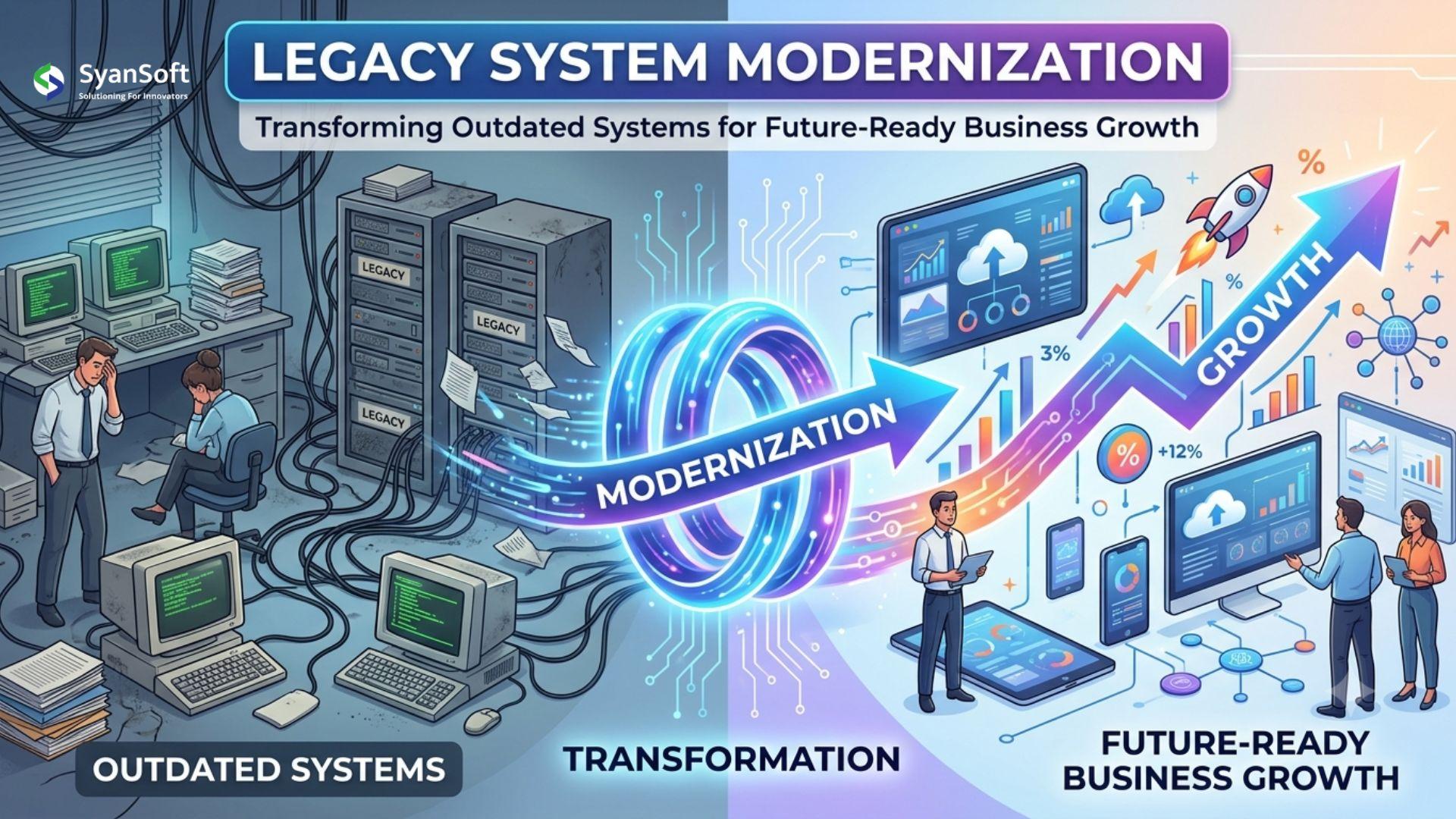
Legacy System Modernization is the process of enhancing and transforming or replacing obsolete applications, infrastructure and technology to meet current business demands. Modernizing outdated technology, companies can increase the performance of their systems, improve security, cut down on expenses for maintenance and also accelerate the digital transformative change.
What is Legacy System Modernization?
Modernization of the legacy system requires updating outdated software applications as well as databases and IT infrastructure in order to take advantage of modern technology like artificial intelligence, cloud computing and automation. APIs are also used and microservices.
Instead of completely replacing the current systems, modernization strategies tend to focus on protecting important business logic and enhancing the performance, functionality as well as customer experience.
Why Legacy Systems Become a Challenge
Numerous businesses are still using outdated systems due to the fact that they are able to store crucial operational processes and information. But, as time passes the systems can pose a number of issues:
Limited Scalability
The majority of legacy applications are built using outdated technology that is struggling to meet the demands of a growing business and increasingly heavy user load.
High Maintenance Costs
Systems that are older require special resources frequently maintained and costly infrastructure that leads to more operational expenses.
Security Vulnerabilities
Technology that is outdated may not be updated with security patches, leaving businesses to cyber attacks and compliance risk.
Integration Difficulties
Modern workplaces need seamless integration between apps as well as cloud platforms as well as third-party service providers. Older systems typically lack the ability to accommodate the integration.
Poor User Experience
The outdated interfaces as well as inefficient workflows could negatively affect the productivity of employees and also affect customer satisfaction.
Benefits of Legacy System Modernization
1. Improved Business Agility
Modern technology allows companies to react quickly to market trends as well as customer needs and the latest technological developments.
2. Enhanced Security and Compliance
The upgrade of legacy software helps companies to implement security enhancements and regulatory compliance standards as well as data security frameworks.
3. Reduced Operational Costs
Modern technology reduces infrastructure costs as well as maintenance and resources requirements, while enhancing the overall effectiveness.
4. Better Performance and Reliability
Modernized systems provide speedier processing, better availability and improved application performance.
5. Seamless Integration
Modern applications are able to easily connect seamlessly with cloud-based services Enterprise platforms, APIs and new technology.
6. Future-Proof Technology Infrastructure
Modernization provides a base that will allow for the future growth of businesses and new initiatives.
Common Legacy System Modernization Approaches
Rehosting (Lift and Shift)
Applications can be moved to the latest cloud-based environments with no major code modifications. This allows quick transfer with no interruption.
Replatforming
The organizations make improvements targeted at applications and then move applications to new platforms that offer increased performance and capacity.
Refactoring
Applications are restructured and optimized to increase the reliability, maintainability, and efficiency, as well as cloud-based compatibility.
Rebuilding
Applications are designed and developed with the latest technology, while maintaining essential business functions.
Replacing
In certain instances, companies upgrade their outdated systems to modern business solutions to better satisfy the current requirements of business.
Technologies Driving Legacy Modernization
Modernization initiatives often rely on advanced technologies, including:
- Cloud Computing
- Artificial Intelligence (AI)
- Machine Learning (ML)
- Microservices Architecture
- API Integration
- DevOps Automation
- Containerization
- Data Analytics Platforms
- Enterprise Resource Planning (ERP) Systems
The use of these technologies helps organizations gain more flexibility, efficiency and also innovation.
Why Choose SyanSoft Technologies for Legacy System Modernization?
SyanSoft Technologies helps businesses transform old systems into flexible as well as secure and flexible digital platforms. The company has expertise of cloud migration modernization of applications, AI integration, and corporate software development, SyanSoft delivers tailored modernization plans that match goals of the business.
The services we offer for our Legacy System Modernization Services include:
- Application Assessment and Strategy
- Cloud Migration Services
- Application Reengineering
- Database Modernization
- API Development and Integration
- UI/UX Modernization
- Security Enhancement
- Performance Optimization
- Ongoing Support and Maintenance
Through combining the expertise of industry experts and cutting-edge technology, SyanSoft ensures a smooth process of modernization that causes minimal interruption.
Conclusion
The legacy systems may hinder the development of new ideas, raise operational costs, which can limit business growth. Modernizing the systems is crucial to organizations that want greater flexibility and security, as well as scalability and competitive advantages.
By taking a strategic plan for Legacy System Modernization, businesses have the ability to harness the full power of new technologies while maintaining important business processes and information. SyanSoft Technologies empowers organizations to adopt digital transformations and create the most modern technology infrastructures to ensure sustainable success.

.jpg)

Comments
Post a Comment