Legacy System Modernization transforming outdated Technology into future-ready business solutions
With the rapidly changing technological landscape, companies must continually innovate to stay relevant as well as efficient and focused on their customers. But, many companies use outdated software that was created years or even decades back. Even though these systems could have been able to help businesses run their operations efficiently during the time, they frequently fail to keep up with modern requirements in terms of security, scalability, flexibility, agility and integration.
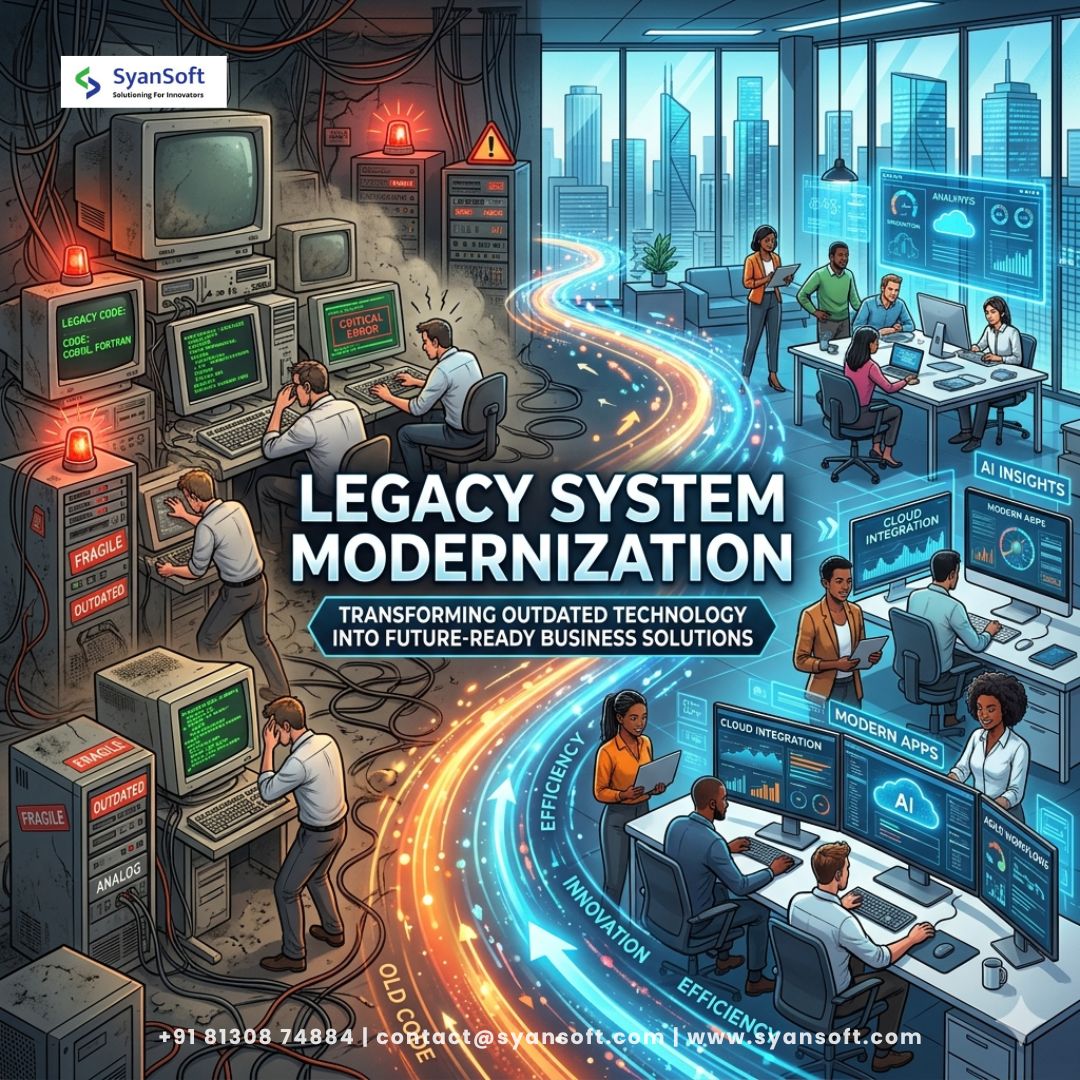
Legacy System Modernization has become an important issue for companies that want to boost efficiency, speed up the digital transformation process, and open up potential growth opportunities. In reviving outdated application systems, infrastructure, and processes, organizations are able to establish a technological foundation that supports the development of new technologies and ensures long-term growth.
What is Legacy System Modernization?
Legacy System Modernization is the method of updating, changing and replacing obsolete software, databases as well as IT infrastructure using modern technology and architectural designs.
The aim is to:
- Enhance System performance
- Improve security and ensure conformity
- Enhance scalability
- Lower the cost of maintenance
- Enable cloud adoption
- Improve user experience
- Support digital transformation initiatives
Modernization allows businesses to keep the core business process while taking advantage of the benefits of new platforms and techniques.
Why Legacy Systems Become a Challenge
Numerous businesses are still using outdated systems due to the fact that they are essential for operational processes. But, as time passes, the systems pose significant problems.
High Maintenance Costs
The older systems typically require specialist knowledge and costly maintenance that can increase operational costs.
Limited Scalability
Traditional applications are usually not made to deal with the demands of new workloads, increasing requirements from clients, or to accommodate the expansion of businesses.
Security Risks
The outdated software is often not equipped with up-to-date security updates as well as safeguards, making companies vulnerable to cyber-attacks.
Poor Integration Capabilities
Older systems might struggle to work with new applications such as cloud platforms, APIs as well as digital services.
Reduced Productivity
The manual process, the slow speed and inefficient interfaces could affect the efficiency of employees.
Difficulty Supporting Innovation
Companies that rely on outdated technology are often faced with difficulties installing AI and automation and other technologies that are emerging.
Benefits of Legacy System Modernization
Enhanced Operational Efficiency
Modern workflow systems optimize processes, streamline repetitive tasks as well as increase overall efficiency.
Improved Security
Modern technology includes advanced security features, compliance control and security mechanisms for data.
Better User Experience
New applications are user-friendly, offering an intuitive user interface, enhanced performances, and more accessible.
Increased Agility
Companies can be more agile in adapting to the changing demands of markets and expectations of customers.
Reduced Costs
Modern platforms reduce maintenance costs and help improve the utilization of resources.
Cloud Readiness
Modern applications are able to leverage cloud infrastructures for more capacity and greater flexibility.
Common Legacy System Modernization Approaches
Rehosting (Lift and Shift)
Applications are migrated to modern cloud or infrastructure with only minor adjustments.
Benefits:
- Faster migration
- Costs for the initial phase are lower.
- Small disruptions to the business
Replatforming
Applications are updated to new platforms, while focusing on optimizations.
Benefits:
- Better performance
- Better scalability
- Improved capabilities
Refactoring
Code for applications is changed to increase efficiency and make it more compatible with the latest technologies.
Benefits:
- More flexibility
- Maintainability improved
- Better integration capabilities
Rebuilding
Applications are designed and built entirely from scratch, using the latest architectures.
Benefits:
- Modernization in full
- Potential for innovation that is enhanced
- Improved user experience
Replacement
Traditional systems are replaced with newer enterprise-grade solutions like ERP, CRM and cloud-based solutions.
Benefits:
- Faster deployment
- Reduction of technical debt
- Access to features that are advanced
Technologies Driving Modernization
Cloud Computing
Cloud platforms can provide scalable reliable, and secure infrastructure to run modern-day applications.
Artificial Intelligence (AI)
AI boosts the efficiency of automation, predictive analytics and smart making.
Microservices Architecture
Microservices increase adaptability, flexibility and maintainability of applications.
API Integration
Modern APIs allow seamless communication between applications and systems.
DevOps Practices
DevOps helps speed creation and deployment. It also helps with testing as well as continuous improvement.
Data Analytics
Advanced analytics can provide information for business and help in the use of data to make informed decisions.
Challenges in Legacy System Modernization
Even with its many benefits modernization projects may be stymied by issues such as
- Complex data migration
- Concerns about business continuity
- Integration concerns
- Limitations in resources
- Requirements for managing change
- Considerations regarding compliance and security
Working with experts in modernization can help organizations tackle these issues efficiently.
Best Practices for Successful Modernization
In order to achieve success Businesses must
Conduct a Comprehensive Assessment
Examine the current systems, dependencies and requirements of the business prior to launching Modernization projects.
Define Clear Objectives
Set measurable goals that are aligned to the business's strategy and goals for transformation.
Prioritize Security
Modernized systems must be in line with security standards that are current and laws.
Adopt a Phased Approach
Modernization is gradual to limit the risk of operational interruptions and risks.
Focus on User Experience
Create applications that increase efficiency and usability for both customers and employees.
Ensure Scalability
Create systems to help with future growth and changing requirements of business.
Why Choose SyanSoft Technologies for Legacy System Modernization?
SyanSoft Technologies helps enterprises transform obsolete systems into agile capable, future-proof, and scalable digital platforms.
Modernization is a service we offer that includes:
- Assessment of the legacy application
- Modernization and cloud migration
- Application reengineering
- API integration
- Microservices and their implementation
- Modernization of the database
- DevOps consulting
- Continuous support and improvement
Our expert technology specialists create customized strategies for modernization that are in line with the business objectives to maximize the ROI of investments.
The Future of Legacy System Modernization
While businesses continue to embrace the digital revolution, modernization remains a crucial aspect of investment. The future modernization projects will be focused on:
- AI-powered software
- Cloud-native architectures
- Hyperautomation
- Analytics in real-time
- Intelligent workflows
- Improved cybersecurity
Businesses that update their technological infrastructure today are more competitive and innovate in the near future.
Conclusion
Legacy System Modernization is no more an option but a necessity in order to keep organizations modern in today's digital world. Systems that are outdated can limit growth, add cost, and hinder innovation. Through the adoption of new technologies such as cloud-based platforms, cloud computing and smart automated processes, businesses can increase efficiency, increase security and build scalable infrastructures to ensure long-term success.
SyanSoft Technologies empowers enterprises to effectively modernize their legacy systems and effectively, assisting them to speed up digital transformation, improve efficiency and operational effectiveness, as well as achieve sustained business growth. Get in touch with our team.

.jpg)

Comments
Post a Comment