Enterprise Data Engineering: Building the Foundation for Data-Driven Business Success
In today's digital-first business environment, data has become one of the most valuable assets for organizations. Every interaction, transaction, and business process generates vast amounts of information. However, raw data alone cannot drive growth unless it is collected, processed, managed, and transformed into actionable insights. This is where Enterprise Data Engineering plays a critical role.
Enterprise Data Engineering focuses on designing, building, and maintaining scalable data architectures that enable organizations to manage and utilize their data efficiently
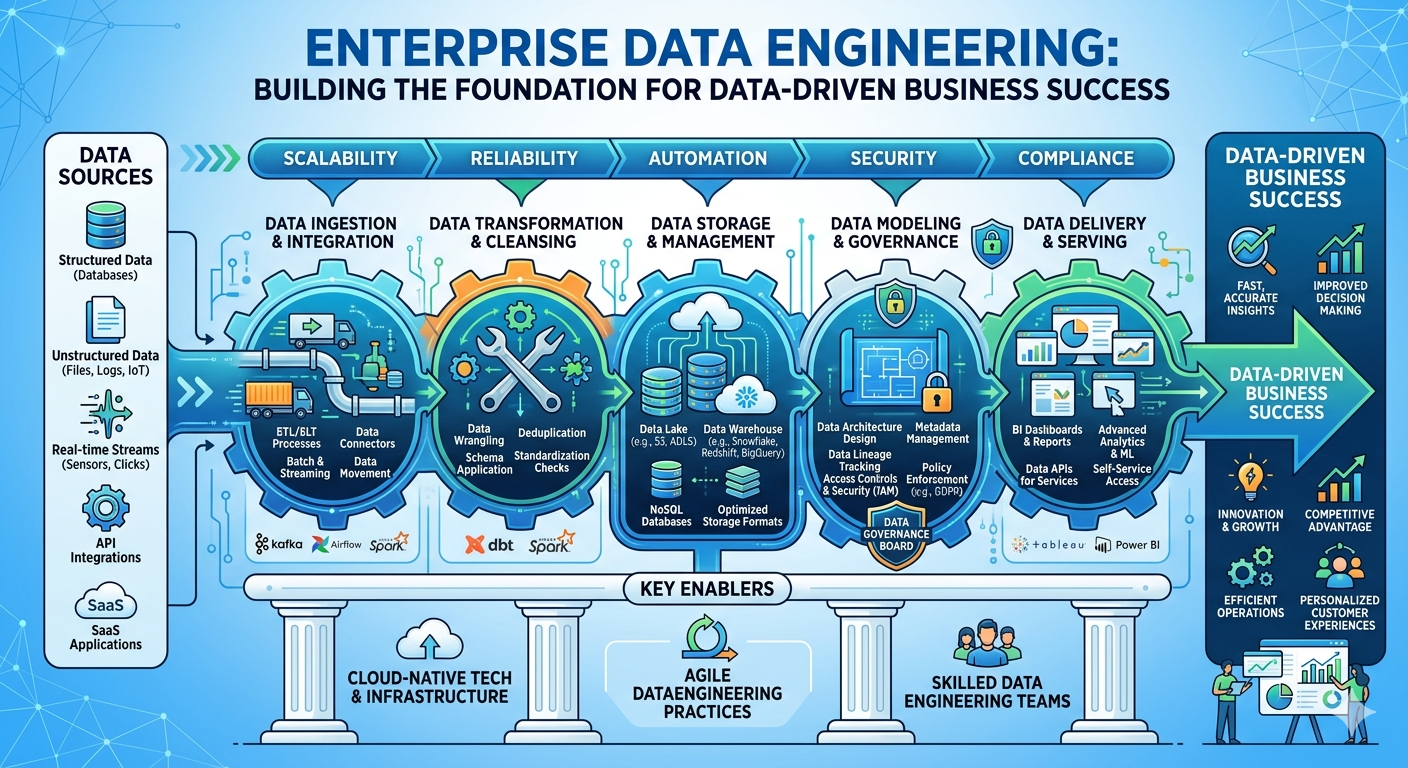
. By creating reliable data pipelines, integrating multiple data sources, and ensuring data quality, enterprises can unlock the full potential of their data and make smarter business decisions.
What is Enterprise Data Engineering?
Enterprise Data Engineering is the process of developing robust systems and frameworks that collect, store, process, and deliver data across an organization. It involves creating data infrastructures that support analytics, business intelligence, artificial intelligence, and machine learning initiatives.
The goal is to ensure that data is accurate, accessible, secure, and available in real time for decision-makers across the enterprise.
Why Enterprise Data Engineering Matters
As organizations generate increasing volumes of structured and unstructured data, managing this information becomes more complex. Enterprise Data Engineering helps businesses:
- Consolidate data from multiple sources
- Improve data quality and consistency
- Enable real-time analytics
- Support AI and machine learning initiatives
- Enhance operational efficiency
- Ensure regulatory compliance and security
Without a strong data engineering framework, businesses often struggle with data silos, inconsistent reporting, and delayed decision-making.
Key Components of Enterprise Data Engineering
1. Data Integration
Combining data from multiple systems, applications, and databases into a unified environment for seamless access and analysis.
2. Data Pipeline Development
Building automated workflows that extract, transform, and load (ETL/ELT) data efficiently across platforms.
3. Data Warehousing
Creating centralized repositories that store structured data for reporting, analytics, and business intelligence.
4. Data Lakes
Managing large volumes of raw and unstructured data to support advanced analytics and AI applications.
5. Data Governance
Establishing policies, standards, and controls to ensure data accuracy, security, privacy, and compliance.
6. Real-Time Data Processing
Enabling organizations to analyze and respond to data instantly for improved business agility.
Benefits of Enterprise Data Engineering
Improved Decision-Making
Access to reliable, real-time data allows leaders to make informed and strategic business decisions.
Enhanced Operational Efficiency
Automated data pipelines reduce manual effort and improve productivity across departments.
Better Customer Insights
Organizations can analyze customer behavior and preferences to deliver personalized experiences.
Scalability
Modern data architectures support growing data volumes without compromising performance.
Stronger AI and Analytics Capabilities
Data engineering provides the foundation required for advanced analytics, predictive modeling, and AI-driven innovation.
Emerging Trends in Enterprise Data Engineering
The future of data engineering is evolving rapidly with technologies such as:
- Cloud Data Platforms
- Data Mesh Architecture
- Data Fabric Solutions
- AI-Powered Data Pipelines
- Real-Time Streaming Analytics
- Generative AI for Data Management
- Automated Data Governance
These innovations are helping enterprises create more agile, intelligent, and scalable data ecosystems.
Why Invest in Enterprise Data Engineering Services?
Professional Enterprise Data Engineering Services help organizations design modern data architectures that align with business goals. Expert teams ensure seamless integration, improved data quality, optimized performance, and long-term scalability while reducing operational complexity.
By investing in data engineering, businesses can transform fragmented information into a strategic asset that drives innovation, efficiency, and growth.
Conclusion
Enterprise Data Engineering serves as the backbone of modern digital transformation initiatives. It enables organizations to harness the power of data, improve decision-making, and support advanced technologies such as AI, machine learning, and predictive analytics.
As businesses become more data-driven, a strong data engineering strategy is essential for sustainable growth, operational excellence, and a competitive edge in the digital age.
Get in touch with our team.

.jpg)

Comments
Post a Comment