Cloud Migration Services for Enterprises: Accelerating Digital Transformation and Business Agility
In the fast-paced world of digital technology, companies are always in need to develop, increase their scale and improve processes. Traditional infrastructure on premises often fails to keep up with these demands due to the high cost of maintenance, as well as limited capacity and slower deployment times. This is the reason why cloud Migration Services for enterprises are crucial in helping to facilitate the digital transformation.
Cloud migration describes shifting applications and data, as well as workloads and IT resources, away from traditional infrastructure or existing environments to cloud-based platforms like AWS, Microsoft Azure, or Google Cloud. Enterprises should understand that this change is more than a simple technical change, but rather a strategy to improve efficiency, agility as well as long-term growth.
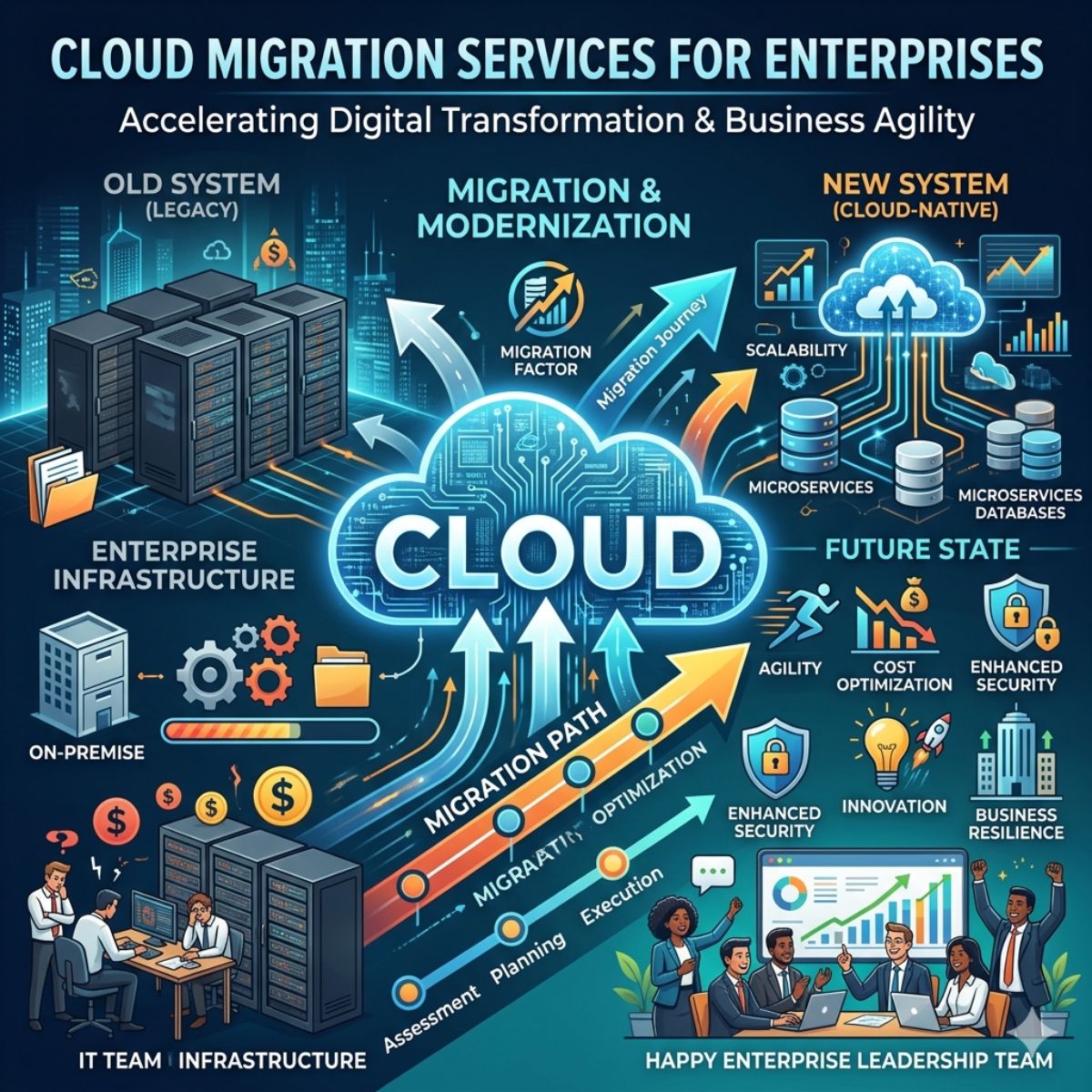
Why Enterprises Are Moving to the Cloud
One of the most significant benefits of cloud computing is scaling. Companies can quickly scale the resources they use up and down upon demand, without having to invest in costly equipment. This is crucial when dealing with shifting workloads.
A further advantage is cost reduction. Cloud-based platforms work on a pay-as-you-go model. This helps companies reduce their capital expenses as well as improve efficiency. Cloud environments also ease the stress of maintaining the physical infrastructure.
Enhanced Security and Compliance
Cloud-based providers of the future offer sophisticated security options like encryption, identity management as well as threat detection. When properly configured, companies have the ability to attain higher levels of security than conventional technology. Cloud migration can also help organizations to meet regulatory and compliance needs more efficiently.
Improved Performance and Innovation
Cloud-based environments facilitate faster deployment of software and services. They allow companies to develop fast, release products quicker and adapt to market developments immediately. The integration with AI as well as data analytics and automation tools also enhance businesses' decision-making and business intelligence capabilities.
Key Stages of Cloud Migration
A cloud migration strategy that is successful usually involves:
- Review of current infrastructure
- The process of selecting and planning the ideal cloud model (public cloud, private, hybrid)
- Migration of applications and data
- Optimization and testing
- Continuous monitoring and supervision
Conclusion
Cloud Migration Services for Enterprises can no longer be considered optional. They must be used to stay modern in today's digital world. With the help of cloud technology, enterprises can benefit from more flexibility, enhanced security and speedier technological advancement, opening the door for sustained growth in business as well as digital innovation.
Contact us for any further Information: 8130874884

.jpg)

Comments
Post a Comment