CI/CD Pipeline Implementation: Accelerating Software Delivery Through DevOps Automation
In today's fast-paced digital landscape, businesses must deliver high-quality software quickly while maintaining stability, security, and reliability. Traditional software development processes often involve manual testing, deployment delays, and increased risks of human error. CI/CD Pipeline Implementation addresses these challenges by automating the software development lifecycle, enabling organizations to release applications faster and with greater confidence.
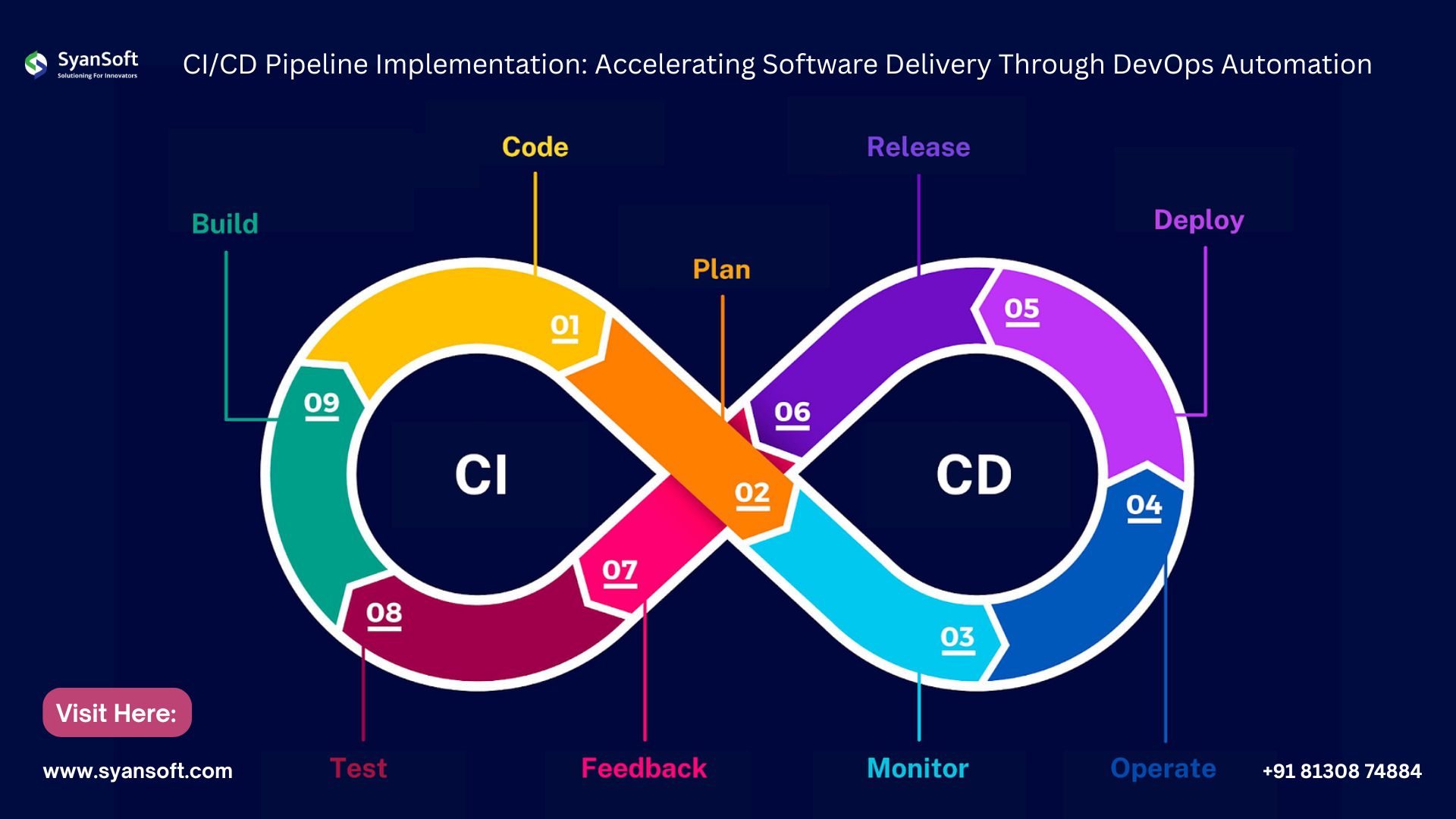
Continuous Integration (CI) and Continuous Delivery/Deployment (CD) are fundamental DevOps practices that streamline code integration, testing, and deployment. By implementing an efficient CI/CD pipeline, businesses can improve collaboration, accelerate innovation, and ensure consistent software quality.
What is CI/CD Pipeline Implementation?
CI/CD Pipeline Implementation is the process of designing, configuring, and automating the stages of software development—from code creation and testing to deployment and monitoring.
A CI/CD pipeline continuously integrates code changes from developers, automatically tests the application, and deploys validated builds to staging or production environments. This automation minimizes manual intervention, reduces deployment risks, and enables rapid software releases.
Understanding Continuous Integration (CI)
Continuous Integration is the practice of regularly merging code changes into a shared repository. Every code commit triggers automated processes such as:
- Source code compilation
- Automated unit testing
- Code quality analysis
- Security scanning
- Build validation
CI helps development teams identify and resolve issues early, improving code quality and reducing integration conflicts.
Understanding Continuous Delivery and Continuous Deployment (CD)
Continuous Delivery
Continuous Delivery ensures that software is always in a deployable state. After successful testing, the application is prepared for release, with deployment typically requiring manual approval.
Continuous Deployment
Continuous Deployment takes automation one step further by automatically deploying every validated code change directly to production without manual intervention.
Both approaches enable organizations to deliver new features, updates, and bug fixes more frequently and reliably.
Why Businesses Need CI/CD Pipeline Implementation
1. Faster Software Delivery
Automated pipelines significantly reduce development and deployment time, enabling businesses to launch products and features quickly.
2. Improved Software Quality
Automated testing and validation detect issues early in the development process, resulting in more stable and reliable applications.
3. Reduced Deployment Risks
Standardized deployment processes minimize configuration errors and reduce the likelihood of production failures.
4. Increased Developer Productivity
Developers spend less time on manual deployment tasks and more time building innovative features.
5. Better Collaboration
CI/CD promotes seamless collaboration between development, testing, operations, and security teams, aligning with DevOps best practices.
Key Components of a CI/CD Pipeline
Source Code Management
Version control systems such as Git enable developers to collaborate efficiently and track code changes.
Automated Build Process
Every code commit automatically generates application builds, ensuring consistency across environments.
Automated Testing
CI/CD pipelines execute multiple levels of testing, including:
- Unit Testing
- Integration Testing
- Functional Testing
- Performance Testing
- Security Testing
Deployment Automation
Applications are automatically deployed to development, staging, and production environments using predefined workflows.
Monitoring and Feedback
Continuous monitoring helps teams identify performance issues, collect user feedback, and optimize future releases.
Benefits of CI/CD Pipeline Implementation
Faster Time-to-Market
Organizations can release new products and updates more quickly, improving competitiveness.
Higher Software Reliability
Frequent testing and validation reduce bugs and improve application stability.
Scalability
CI/CD pipelines support cloud-native architectures, microservices, and enterprise-scale applications.
Cost Optimization
Automation reduces manual effort, operational costs, and downtime associated with traditional deployment methods.
Enhanced Security
Security testing integrated into the pipeline helps identify vulnerabilities early, supporting DevSecOps practices.
Popular CI/CD Tools
Organizations commonly use modern DevOps tools such as:
- Jenkins
- GitHub Actions
- GitLab CI/CD
- Azure DevOps
- CircleCI
- Bitbucket Pipelines
- Docker
- Kubernetes
- Terraform
- Ansible
These tools help automate development workflows, infrastructure management, and application deployment.
Best Practices for Successful CI/CD Implementation
To maximize the benefits of CI/CD, businesses should:
- Automate testing at every stage
- Use version control effectively
- Implement Infrastructure as Code (IaC)
- Monitor pipeline performance continuously
- Integrate security scanning into the pipeline
- Maintain consistent deployment environments
- Adopt containerization using Docker and Kubernetes
Why Choose SyanSoft Technologies for CI/CD Pipeline Implementation?
SyanSoft Technologies helps businesses implement secure, scalable, and automated CI/CD pipelines tailored to their software development needs. With expertise in DevOps, cloud computing, containerization, Infrastructure as Code, and enterprise application development, SyanSoft delivers solutions that accelerate software delivery while maintaining quality and security.
From pipeline design and DevOps consulting to cloud deployment and ongoing optimization, SyanSoft enables organizations to achieve continuous innovation and operational excellence.
Future of CI/CD Pipeline Implementation
The future of CI/CD is driven by Artificial Intelligence, machine learning, GitOps, serverless computing, and intelligent automation. AI-powered pipelines will predict failures, optimize deployments, automate testing, and improve release reliability.
Organizations adopting advanced CI/CD practices will benefit from faster innovation cycles, improved customer experiences, and greater business agility.
CI/CD Pipeline Implementation is essential for organizations seeking faster software delivery, improved quality, and efficient DevOps practices. By automating development, testing, deployment, and monitoring, businesses can accelerate digital transformation while reducing operational risks.
Partnering with an experienced DevOps solutions provider like SyanSoft Technologies helps organizations build reliable CI/CD pipelines that support continuous innovation, scalable growth, and long-term business success. Contact us for any further Information: 8130874884

.jpg)

Comments
Post a Comment